
The Phone Call After Midnight
CHAPTER 40 | THE PHONE CALL AFTER MIDNIGHT
“Alice, promise me—
don’t let anything bad happen to you again.
Maybe you can endure it,
but I can’t. Please.”
Those were the words my professor from Massachusetts Institute of Technology,
Joel A. Huberman,
said to me as he held me tightly before leaving my home.
I will never forget that embrace.
Or the way he said it.
During my years at MIT,
he helped me survive one of the hardest periods of my life.
He was not my father.
Not my brother.
And yet the care he showed me
was deeper than that of many relatives.
That evening,
as I slowly told him about everything that had happened after I left MIT—
the fire,
the losses,
the betrayals,
the rebuilding,
the repeated task of climbing back out of ruin—
he listened quietly for a very long time.
And in the end,
that was all he said:
“Don’t let anything bad happen to you again.”
Why?
Because some things,
even decades later,
still leave burn marks inside a person.
And it all began
with a telephone call in the middle of the night.
Ring—
Ring—
The phone suddenly rang after midnight.
The whole house was silent.
I picked up the phone.
On the other end,
I heard my younger brother’s voice, almost screaming:
“Sis—the motel is on fire!”
And then,
the line went dead.
I tried calling back.
Nothing.
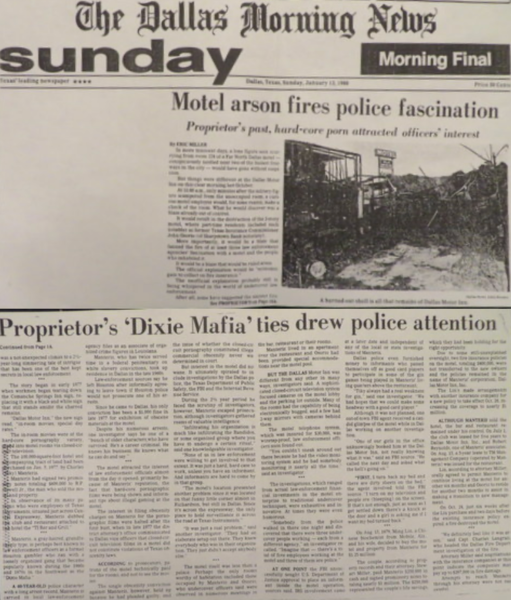
It was our motel in Dallas.
At that time,
my second brother was managing the property for us.
Meanwhile,
my husband Ming and I
had already moved with our children
to Mobile, Alabama.
In those few moments,
my mind filled with thousands of questions:
What happened?
Why did the fire start?
Was anyone hurt?
Did my brother escape?
Was the entire motel gone?
I knew immediately
that it would be a long night without sleep.
What I did not know
was that this phone call
would lead our lives into another kind of fire.
Years earlier,
after Ming accepted a position at
Children’s Hospital Los Angeles,
our family moved to Southern California.
Those were hopeful years.
Real estate prices kept rising,
and I was fortunate enough to do well in property investments.
At the same time,
my four younger brothers were preparing to immigrate from Taiwan to the United States.
I had only one thought:
At the very least,
they should have a place to live,
a job to do,
and a way to support their families.
So I took the money I had earned in California
and invested it in a motel in Dallas, Texas.
At the time,
I believed I was building a future for my family.
I did not realize
that someone else was already waiting
to exploit that trust.
The night of the fire,
my brother did not even have time to put on shoes.
Barefoot,
he grabbed a hoe
and ran toward the wooden bridge connecting the restaurant and office area to the guest rooms behind them.
Because he knew:
if that bridge could be cut off,
the fire might not spread to the rooms in the back.
Only later did we discover
that the bridge itself
had been part of the arson plan all along.
The previous owner had calculated everything carefully.
The fire would begin in the restaurant and office area.
The firefighters would arrive quickly,
cut the bridge,
and save the guest rooms behind it.
The motel could continue operating.
And he
would force us out
and take the property back.
But he failed to predict one thing.
On the way to the motel,
the fire truck was involved in a traffic accident.
By the time firefighters returned to the scene,
they were more than ten minutes late.
And those extra minutes
changed everything.
The fire that was only meant to damage the front buildings
ended up destroying the entire motel.
That night,
my brother kept swinging the hoe at the bridge.
Barefoot.
With flames burning behind him.
And many years later,
when I finally looked back on that night again,
I slowly realized:
the fire did not only burn down a motel.
It also burned away
my original understanding of trust.
I trusted the real estate agent recommended by friends.
I trusted the lawyer she introduced.
I trusted explanations that sounded reasonable.
I believed goodwill would be met with goodwill.
And years later,
when another stranger entered my life
and slowly, carefully,
built my trust step by step,
I did not recognize what was happening.
Because that pattern
had already existed inside me for many years.
I was someone willing to believe in people.
I was someone who,
once trust was given,
gave everything completely.
And there are people in this world
who know exactly how to use that.
Many years later,
sitting in front of Professor Huberman,
telling him all these stories one by one,
I finally understood something:
what hurt him most
was not the money I had lost.
It was seeing that,
after surviving so many fires,
I still chose to believe in people.
That day,
he held me tightly
and said almost like a plea:
“Alice, promise me.
Don’t let anything bad happen to you again.
Maybe you can endure it.
But I can’t.”
At the time,
I smiled and told him:
“I’m fine.”
But only later did I realize:
he saw something in me
that I could not yet see in myself.
Perhaps
what I truly needed to learn
was not only how to rise again from ruins.
But how to pause,
before giving my trust,
and ask myself:
Does this really make sense?



)