

The Five-Dollar Rose Garden
That scam tried to destroy me.
My fight back began at a press conference, but it grew quietly in a rose garden.
After the scam, a small and almost unnoticed event quietly changed the course of my life.
Roses.
Reporters who came to my house would always stop in the front yard.
“Why roses?” they would ask.
“The whole street has lawns. Yours is the only yard full of flowers.”
It was true.
My neighbors’ front yards were neat and uniform—green lawns trimmed with care.
My yard, however, was full of color and life, though it had grown out of despair.
The scam left me exhausted in both body and spirit.
I couldn’t sleep at night.
During the day I felt as if I were dragging heavy blocks of lead behind me.
California was under water restrictions then, and the lawn slowly turned yellow and dry.
I held my grief in my hands and picked up a shovel.
At first I simply dug here and there.
Digging became an outlet for the pain.
After a few weeks, the lawn was gone.
All that remained was bare soil.
That emptiness, strangely, felt honest.
I knelt on that patch of ground and prayed:
“How do I walk out of this pain?”
A small but clear thought surfaced:
Plant some flowers.
Then I asked myself another question:
“What kind of flowers?”
The answer came in a very practical way.
“The cheapest ones.”
After losing all my savings to the scam, it seemed like the only reasonable choice.
I began visiting the Home Depot near my house, wandering through the clearance section.
I had time, but no energy and no direction.
Until one day, I saw them.
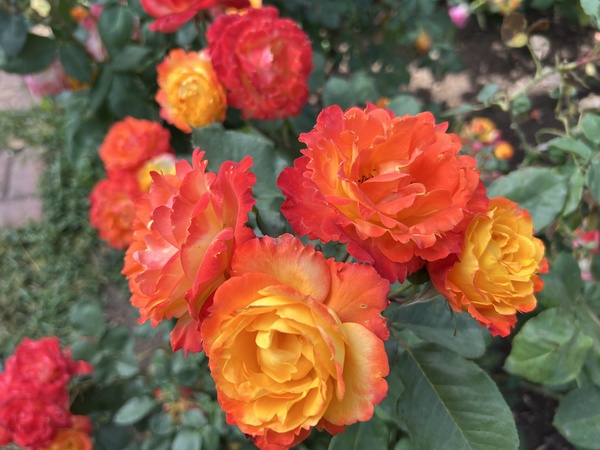
Roses—once priced at twenty, thirty, even fifty dollars—were now all five dollars each.
I bought one.
Then another.
Within a few months, I had bought nearly a hundred.
A gardener told me roses needed deep holes to be planted properly. The labor alone would cost twenty dollars per plant.
I refused.
I had time. I had my son. And I had the strength.
So we did it ourselves.
For every rose bush, we dug the soil and planted it by hand.
Sweat mixed with dirt—and with my tears.
At the time, I didn’t realize that what I was doing was more than planting flowers.
I was planting my future again.
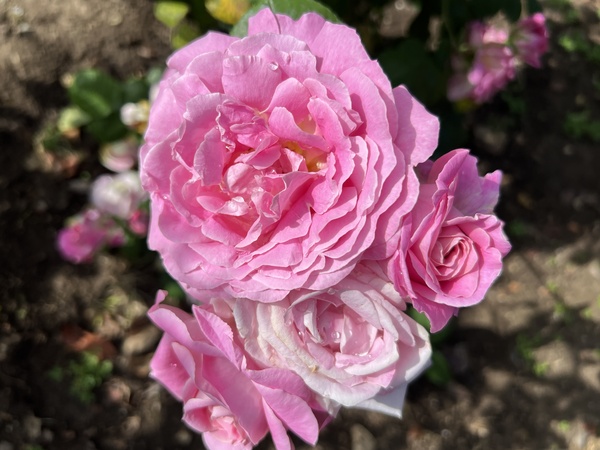
When the first roses bloomed, I was stunned.
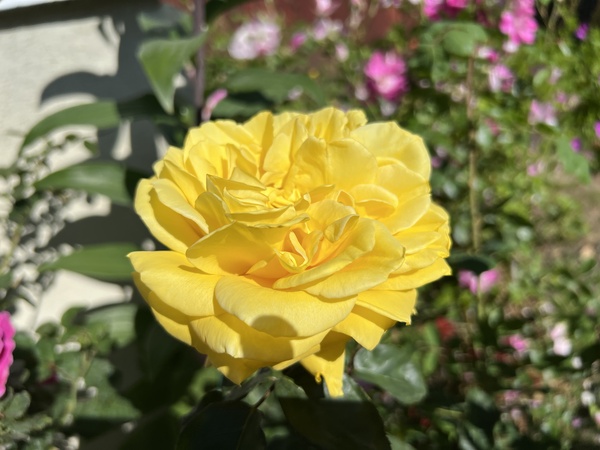
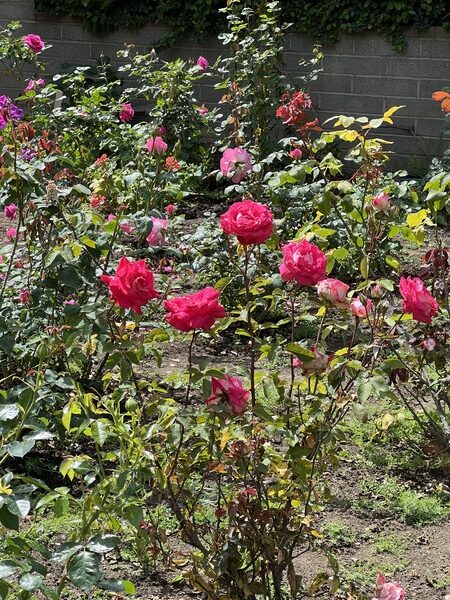
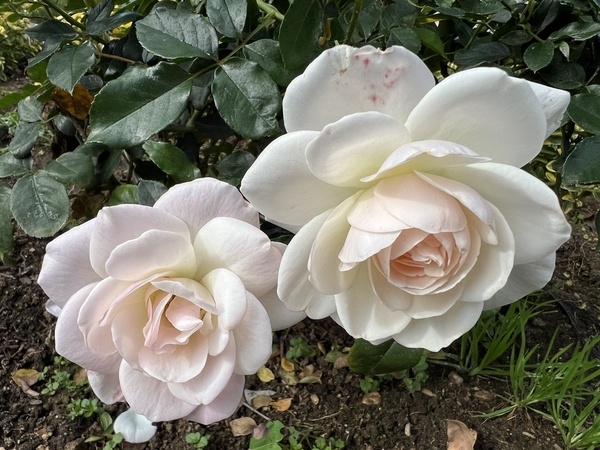
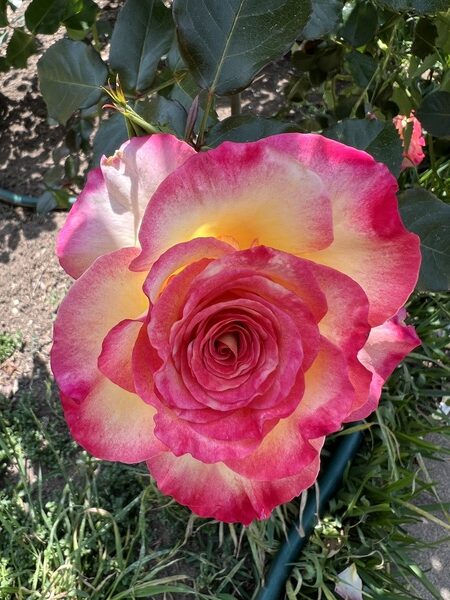
Red, pink, white, yellow—bursting against the orderly green of the street.
Neighbors began to stop, smile, and linger.
“So beautiful.”
“Thank you for making this street more beautiful.”
For the first time, my grief seemed to soften.
Roses taught me patience.
They also taught me about boundaries.
Thorns are not flaws.
They are protection.
Beauty requires discipline.
Pain requires pruning.
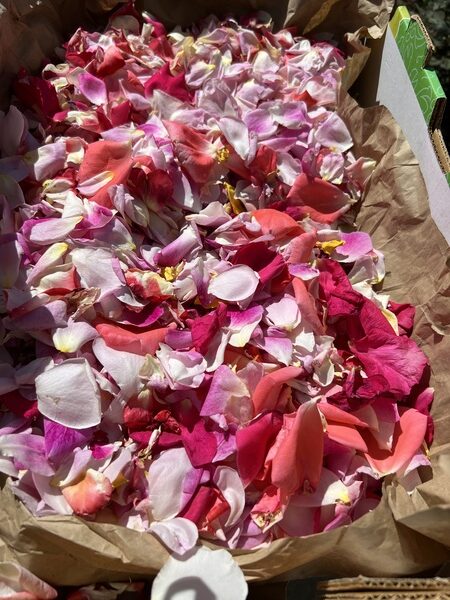
I began collecting fallen petals, drying them, and giving them to friends.
Even after they faded, they still carried a gentle fragrance.
That was when I realized something:
Losing one’s original form does not mean losing one’s value.
It simply means taking on another form.
What surprised me even more was that the roses became part of the media story.
When reporters visited, they were always drawn to the garden.
Once, a reporter from the Los Angeles Times told the photographer,
“Make sure you take a good picture of her. This is the way I can help.”
So the photographer had me stand among the rose bushes for more than an hour.
When reporters visited, they were always drawn to the garden.
Television stations also liked filming in the garden.
They filmed me pruning branches, touching the petals.
Because of the roses, a story of pain carried a layer of light.
During filming, reporters often placed me in the middle of the flowers.
The images were bright and colorful, calm and beautiful.
But the camera could not see the dirt beneath my fingernails.
It could not see the midnight prayers.
Nor could it see the small uncertainty that greeted me every morning when I woke up.
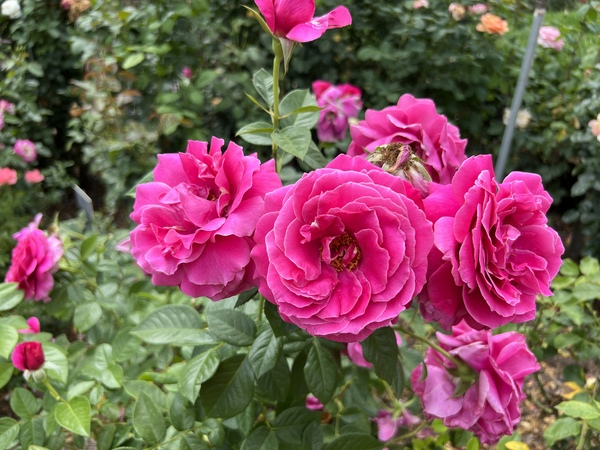
Yet the garden kept living—quietly, resiliently.
Scams strike quickly and precisely.
Gardens grow at a completely different rhythm.
They demand waiting.
Care and pruning.
Pruning is a kind of violent mercy.
You cut away living branches so that life can return stronger.
The camellias left by the previous homeowner bloom in winter.
Then, in spring, the roses follow—wave after wave.
Recovery does not come in a single moment.
It comes through cycles, persistence, and resilience.
A lawn can be trimmed on the weekend.
But a garden cannot.
Slowly, I began to understand:
Healing never arrives in one clear moment.
There is no morning when you wake up and everything is suddenly better.
It is more like a garden.
There are seasons.
There is patient waiting.
There is the quiet strength of growing again and again.
A lawn can be repaired over a weekend.
A garden cannot.
A garden needs time.
It needs perseverance.
It needs resilience.
It must take root.
It must endure heat.
It must survive the trial of pruning.
And even so, it still blooms.
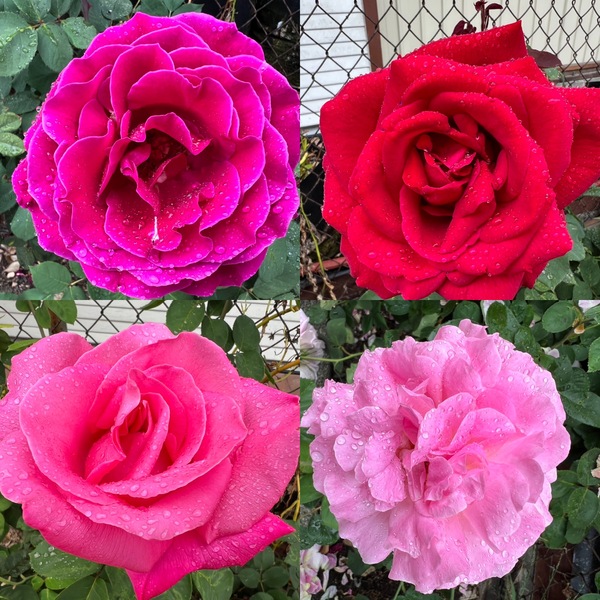
Today, if you walk down my street, you will see roses covering what was once a lawn.
Red, pink, white and yellow.
In a neighborhood of orderly green, they stand like a quiet but determined declaration.
You cannot see the shovel.
You cannot see the drought.
You cannot hear the prayers whispered late at night.
But they are all there—
In every flower.
In every thorn-covered branch.
These roses carry more than color and fragrance.
Today, if you walk down my street, you will see roses covering what was once a lawn.
Red, pink, white and yellow.
In a neighborhood of orderly green, they stand like a quiet but determined declaration.
Beauty is not the opposite of pain.
Very often, beauty grows out of pain.
That is why these flowers are not decorations.
They are witnesses.
And I stand among them.
The rose garden continues to grow.
Every petal, every pruning, every new bud reminds me of something:
Scams can take away money.
They can take away trust.
They can even take away part of a life.
But they cannot take away a person’s ability to begin again.
If my loss can cause one person to stop and think,
If my roses can give a passerby even a small moment of hope,
Then this garden is no longer just a garden.
It is an answer.
And I know now:
The woman who once stood in the dirt, digging holes with muddy hands,
was not simply planting roses.
She was planting her life back into the world.




)
