

The Person Who Couldn’t Walk Away
Part Two|When Hope Becomes a Prison
Later, I began to realize:
what truly traps a person
is often not “loss.”
It is this:
the desire to get it back.
Someone lost forty‑seven million dollars.
Someone lost three million.
Someone lost two million seven hundred and fifty thousand.
Someone lost over eighty thousand.
The numbers are different.
The identities are different.
The scale of impact is different.
But what finally trapped them all
was the same thing:
Hope.
That bank president
was no longer trying to make more money.
He was filling a hole.
He wanted to recover what he had lost.
He wanted to save the bank.
He wanted to restore everything to how it was.
But the deeper he went, the larger the hole grew.
And the system knew better and better how to hold him.
A customer of my barber
lost three million dollars.
That was nearly a lifetime of savings.
But the most shocking thing was not the amount.
It was what he later said:
“If I still had five hundred thousand dollars,
I would keep investing.”
Because he believed:
one more step, and the money would come back.
When I heard that,
I suddenly understood:
this was no longer like investing.
It was like gambling.
But even more dangerous than gambling.
A gambler knows they are gambling.
But these people often still believed:
they were “recovering” what was theirs.
The producer’s father‑in‑law
lost two million seven hundred and fifty thousand dollars.
Later, he began to show signs of dementia.
Perhaps this cannot be entirely attributed to the scam.
But some things,
you know they leave a mark in a person’s heart.
That feeling of betrayal.
The sudden collapse of trust in people.
The discovery that the world is not what you once believed.
For an elderly person,
that despair is sometimes deeper than the loss of money itself.
But the case I cannot walk away from
is a ninety‑three‑year‑old man.
He lost just over eighty thousand dollars.
Compared to the numbers above, it may not seem huge.
But that was his entire life.
It was not an investment loss.
It was:
an old man’s last sense of safety.
His last anchor.
The last hope that he could still go on.
Later,
he could not walk away.
In the end, he chose to end his life.
Every time I think of this,
I ask myself:
what has happened to this world?
How can a system
drain a person’s hope to this extent?
And the most frightening thing is:
this is no longer just a local crime.
Not one city.
Not one country.
Not one language group.
It is global.
In Asia.
In the United States.
In Africa.
Everywhere there are people who are lonely,
anxious, afraid of the future,
or hoping to start their lives over.
And the most terrifying thing about this system
is not that it understands technology.
Not that it understands finance.
It is this:
it understands people too well.
It knows:
after a person has lost so much,
the most vulnerable moment
is not right after being scammed.
It is:
the moment they still want to get the money back.
Because then,
what truly traps them
is often no longer the scammer.
It is —
“If I stop now,
everything before this moment will truly be lost.”
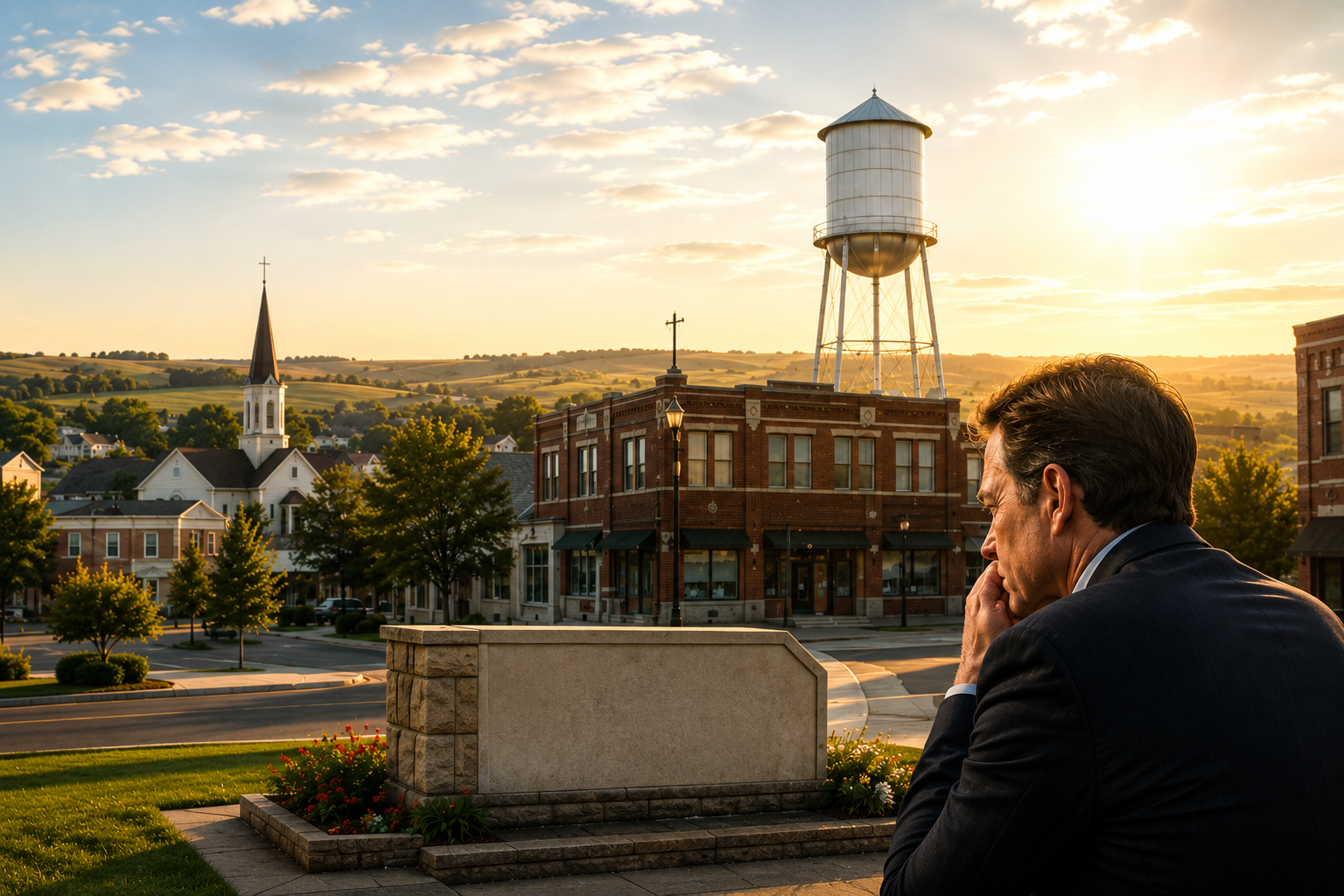
Later, Shan Hanes was sentenced.
More than twenty‑four years.
For a community bank president, that is almost the end of a life.
But what truly ended
was not just his career.
It was:
the way an entire town used to believe in the world.
The bank collapsed.
And in a place like that,
a bank is not a building.
It is the heart of a community.
The people there
had saved their money, taken out loans, talked about crops, discussed the weather, and known each other their whole lives — all inside that bank.
When the bank disappeared,
what was lost was not just a financial institution.
It was the feeling that:
“we can still trust one another.”
I have kept thinking:
for those elderly people,
what truly breaks them
may not be just the loss of their retirement savings.
It is the sudden realization:
that even the person they trusted most,
the system they knew best,
the place where they felt safest —
could all collapse.
And this is what makes this era so unsettling.
Because what is under attack now
is no longer just individuals.
It is trust itself.
That is why
I finally understood:
You cannot stay inside that system
and expect to remain untouched by it.
Because it does not operate by “convincing you.”
It operates by consuming you.
Consuming your hope.
Consuming your judgment.
Consuming your emotions.
Consuming your desire for the future.
Until one day,
you can no longer tell:
whether you believe in it,
or whether you are just terrified to admit that you have lost everything.
So later I learned:
true walking away is not getting the money back.
It is:
finally stopping to hope in that system.
This hurts.
Because it means:
you must truly accept that some things will never return.
But from that moment on,
a person can truly begin
to walk away, slowly.




)